
The Analogue

There is a particular pleasure in driving an old car.
Not because it is better by any conventional measure. It may be slower, noisier, less efficient and less comfortable. There is no LiDAR, heads-up display, CarPlay, digital radio or twenty-speaker sound system. There may not even be heated seats.
You turn a key. The engine starts. You feel the road through the steering wheel. You look through the windscreen rather than at information about what lies beyond it.
It is tempting to describe the attraction as nostalgia. But perhaps what we are searching for is not the past at all.
Perhaps we are searching for immediacy.
Most of us have stood in front of a screen, keypad or control panel and wondered why something so simple has become so complicated. Too many options. Too many menus. Too much information. The technology intended to make life easier instead announces itself, demanding our attention.
It can be strangely disorienting.
What we really want is for these things to work, and then disappear.
Architecture has not escaped this tendency. Intercoms, alarms, sensors, control panels and keypads increasingly occupy the surfaces of our homes. Their presence is often treated almost as a virtue. If there is technology in the house, it seems we are supposed to know about it.
But the things we remember about a room are rarely technological.
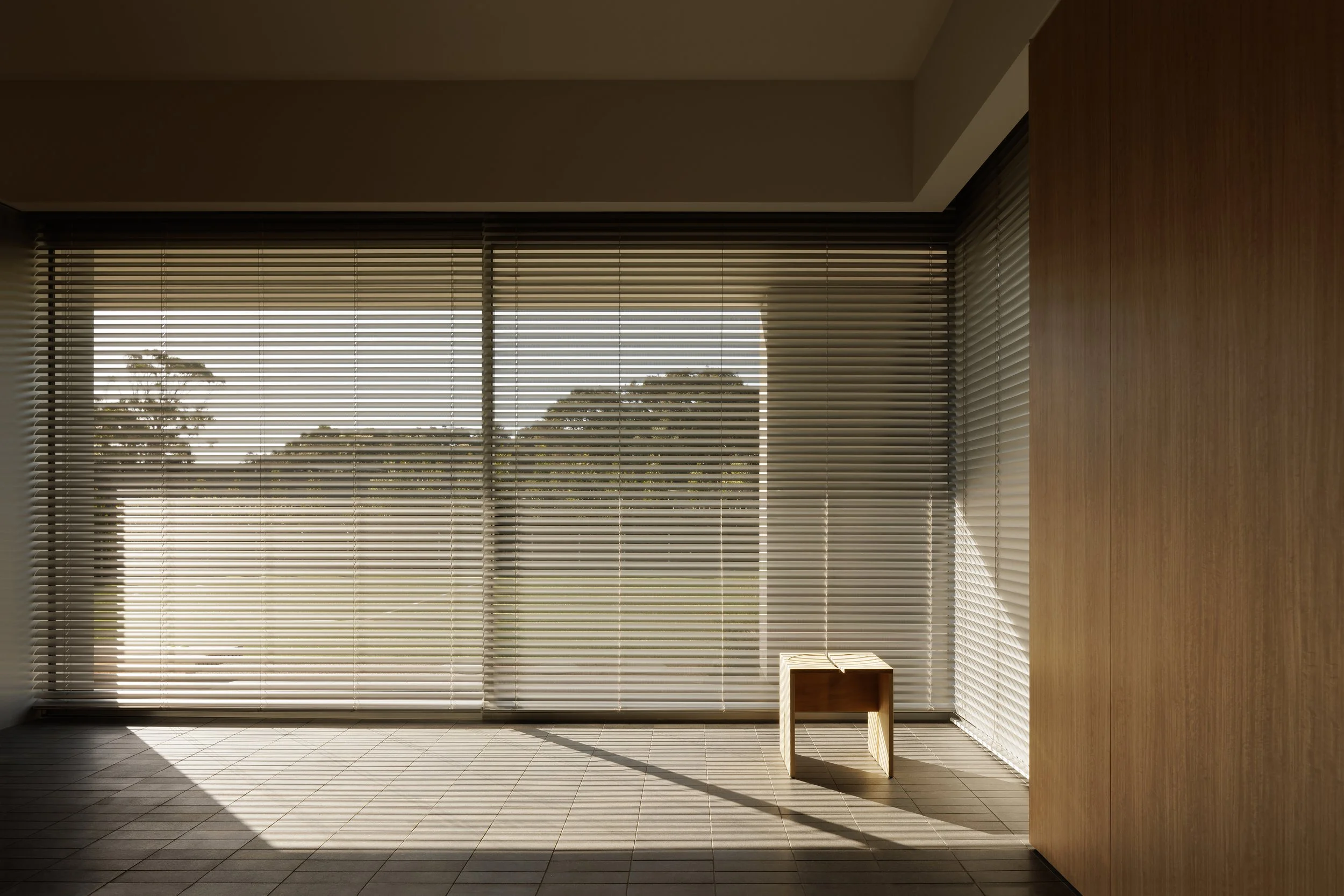
We remember the quality of its light. The temperature of the air. The feeling of the floor beneath our feet. The sound of rain outside. The proportion of a window. The shade of a courtyard late in the afternoon.
The technology, ideally, is somewhere else.
This is not an argument against it. A contemporary house depends on sophisticated systems for heating, cooling, security, lighting and environmental control. The question is one of hierarchy.
Technology should support the experience of architecture, not compete with it.
The same is true of the small rituals of daily life.
Coming home is one of them.
There is a moment when we arrive, put down our keys, remove a coat, leave an umbrella, take off our shoes. Or when someone visits and pauses at the threshold before entering the house.
Many contemporary homes barely acknowledge this choreography. There is a front door and then, immediately, a room.
Yet there can be a quiet theatre to arrival without anything theatrical about the architecture itself. A softer light. Enough space for one person or a small group to pause. A place for a bag. A cupboard for coats. Somewhere for shoes and umbrellas. Small things, but considered.
The architecture provides calm by anticipating the ritual.
This, too, is part of the analogue.
Not the removal of technology, but its subordination to something more human.
There is a growing attraction to lo-fi experiences, to camping, cabins, off-grid retreats, records, film cameras and old cars. We willingly step away from the bleeding edge in search of something simpler, more tactile and more visceral.
Not because the past was better.
Because fewer layers can sometimes bring us closer to the experience itself.
Perhaps the most technologically successful room is therefore the one in which we are least aware of technology.
We simply sit within it.
Aware of the space.
Aware of the light.
Aware of the time passing.
And nothing else is asking for our attention.
Related projects: Sorrento Bathhouse, LDS II Residence, HMM Residence.
Related pages: Interior Architecture Melbourne, Residential Architects Melbourne.
