
Reflections on Small Acts of Permanence
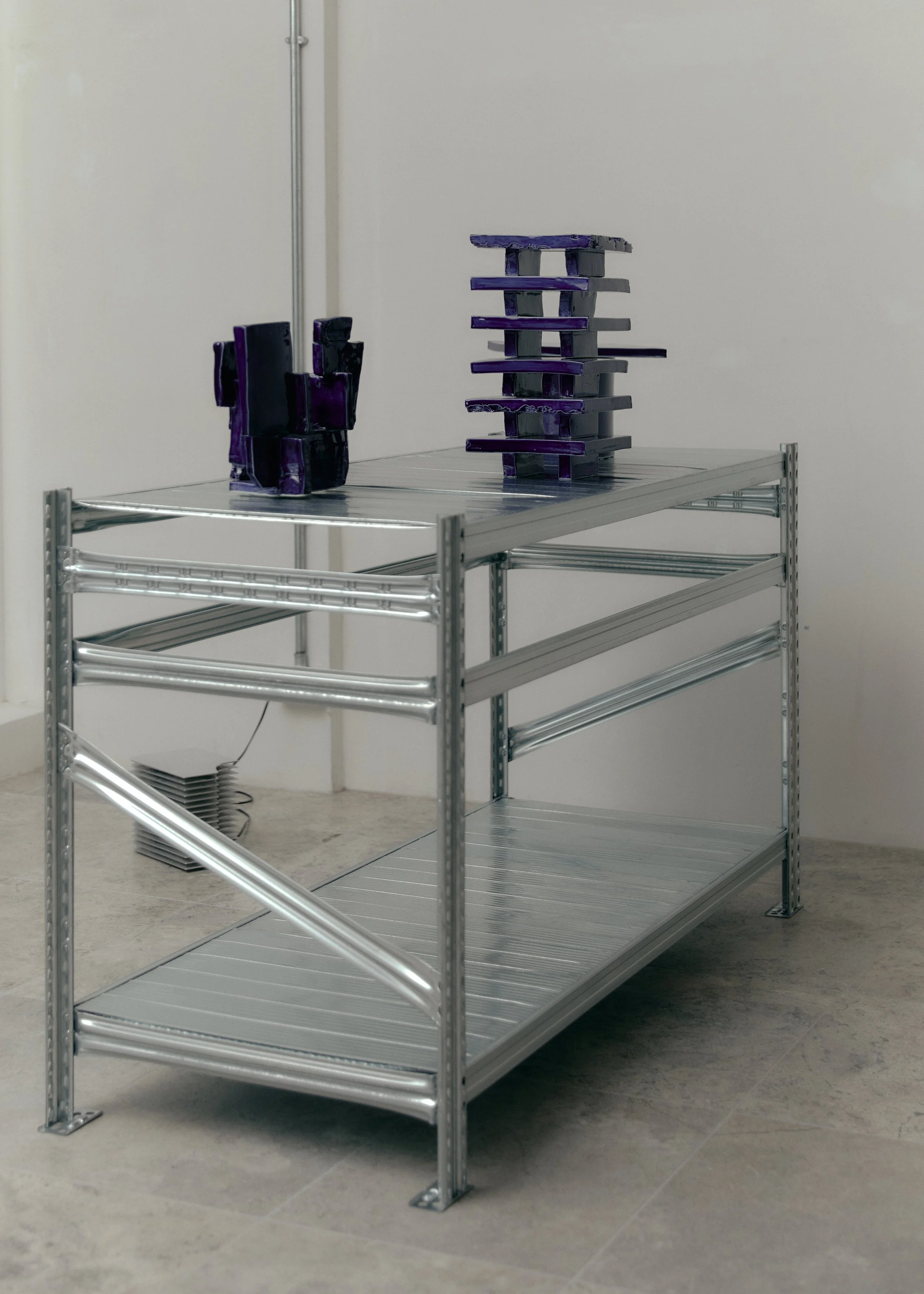
Photography by Casper Plum
I began working with clay experimentally, largely out of curiosity. It offered an escape from the pace and complexity of architecture, but quickly became something more serious: an outlet for design exploration rather than design expression.
I was not looking for another medium through which to reproduce the architectural language of the practice. I wanted to see what might happen when design was separated from program, function and the many layers of negotiation that define a building.
Clay allowed me to explore form for its own sake.
When I begin a work, I think about form, connection and mass: how one element meets another, how weight is held or implied, and how a composition can feel stable while retaining tension. Architectural readings may emerge through walls, openings or enclosures, but I am not attempting to make miniature architecture.
What I bring from architecture is an instinct for proportion, balance, asymmetry and scale. I am also interested in space, even at the scale of an object. A solid form can suggest an interior or create a sense of enclosure without becoming a model of a room or building.
The experience of making is very different from architecture. Clay is fast, rough and direct. It is singular in material and execution. There is one material, one maker and an immediate relationship between a decision and its consequence.
Architecture is almost never like this. It is produced over months and years through drawings, consultants, approvals, contractors and many other hands. The distance between an idea and its realisation can be substantial.
With clay, I can press, stack, cut, join and alter a form as I make it. The work does not need to solve a functional problem or justify itself through use. It can simply be form for form’s sake.
Preparing for Small Acts of Permanence required me to think beyond individual objects. A gallery exhibition demanded a consideration of scale, cohesion and collective intent.
It was not a shift in style, but a moment to recognise the broader attitude emerging across the work and build more deliberately on the techniques and forms I had developed.
Being an architect, and being isolated from the ceramics world, protected me from some self-consciousness. I was not embedded in its conventions or hierarchies, and did not fully understand what I was supposed to be anxious about. That distance allowed the work to develop on its own terms.
The two practices remain distinct. The exhibition did not resolve them into one identity, nor did I want it to. It gave me a reason to reflect, edit and become more deliberate. The next stage will involve making fewer works, refining my skills and approaching each piece with greater intention.
The title Small Acts of Permanence was never intended to suggest that the objects would simply last. For me, permanence is less about durability than the appearance of survival.
I wanted the works to feel as though they had already endured: fragments, ruins or objects uncovered from another time. Their history is imagined, but the sense of age is embedded in their mass, irregularity and surface.
They are new objects that already seem to contain the past.
Related projects: Sorrento Bathhouse, EPSC Residence, HMM Residence.
Related pages: Our Studio, Art Practice, Interior Architecture Melbourne.
