
The Comfort of Mass
Milan Design Week can make inspiration feel almost excessive. There is so much to see, and so much designed to be seen, that the act of choosing a highlight becomes less about objective judgement and more about recognition. You see what you are ready to see, actively and passively. Certain works stay with you because they speak to questions already forming in your own practice.
For me, Linde Freya Tangelder’s Fluid Re-Collection was one of those moments.
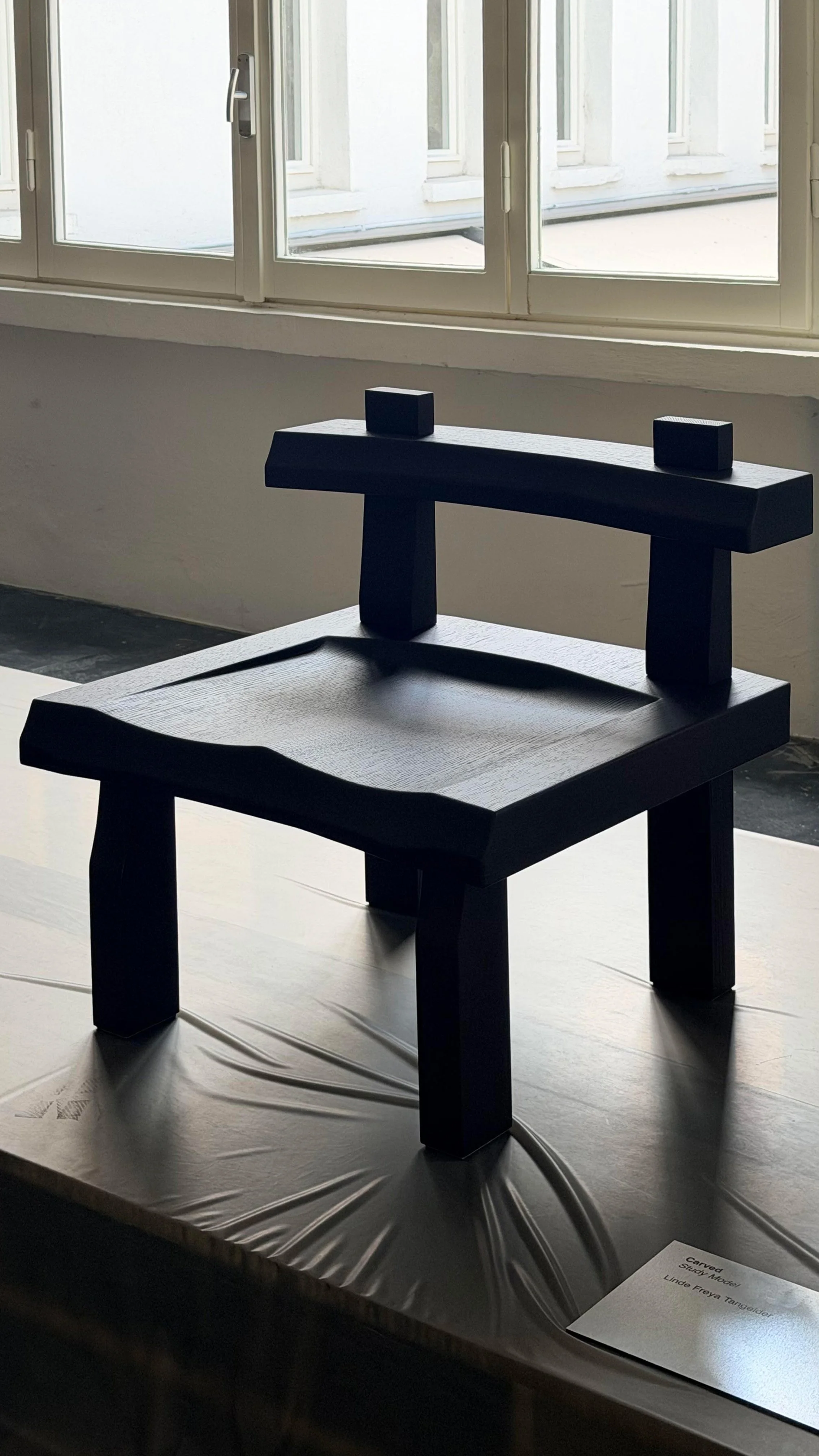
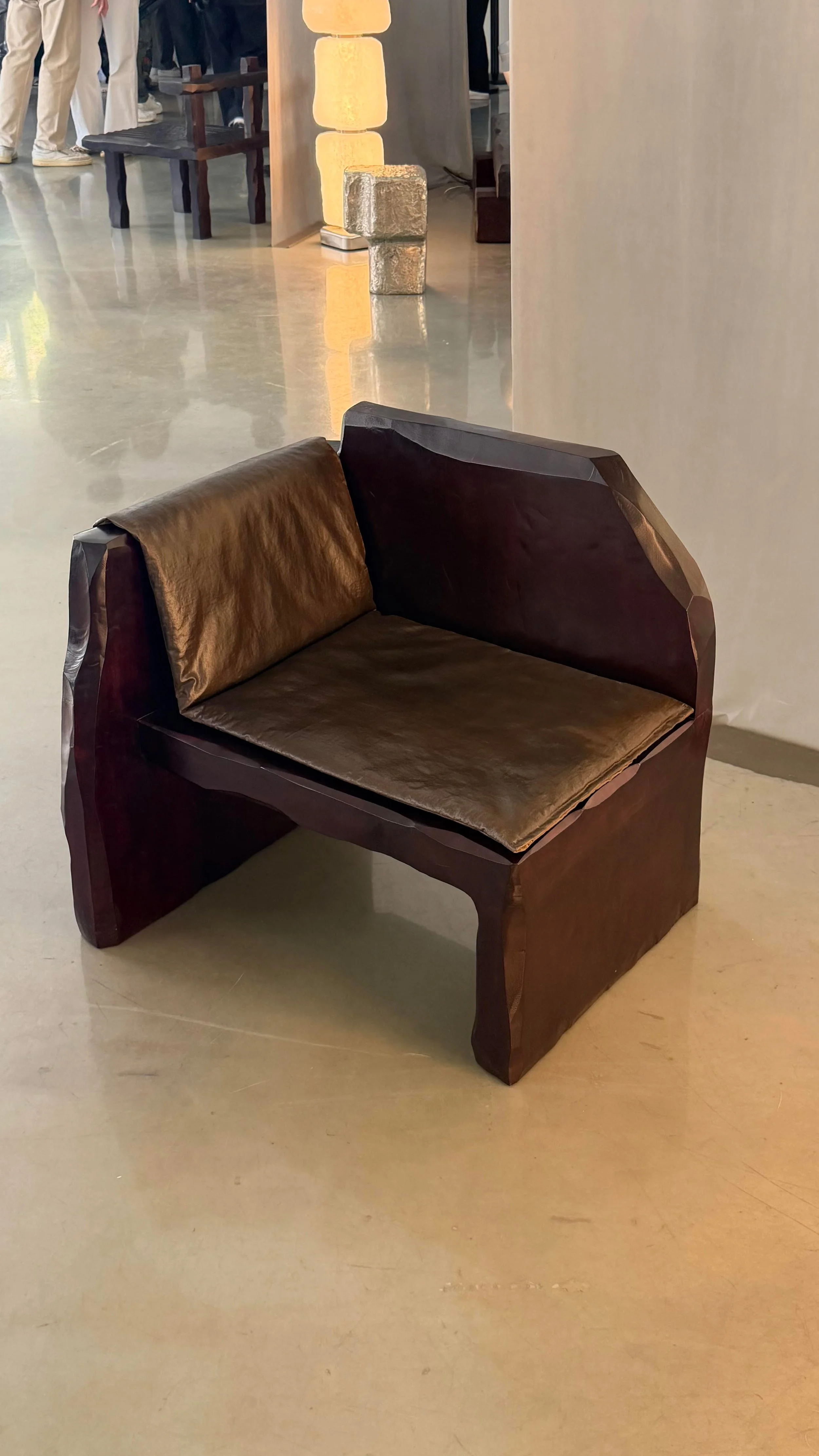
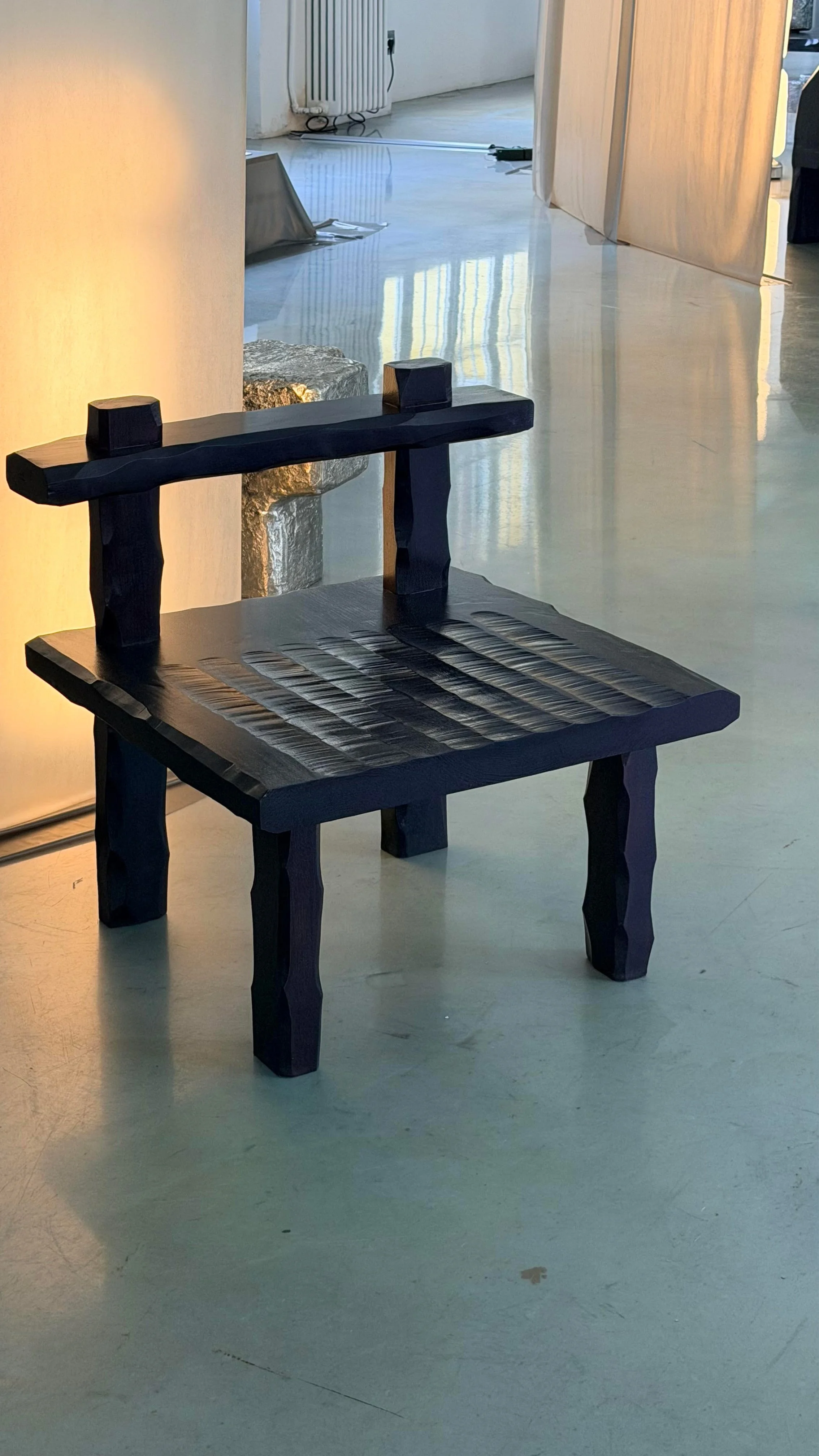
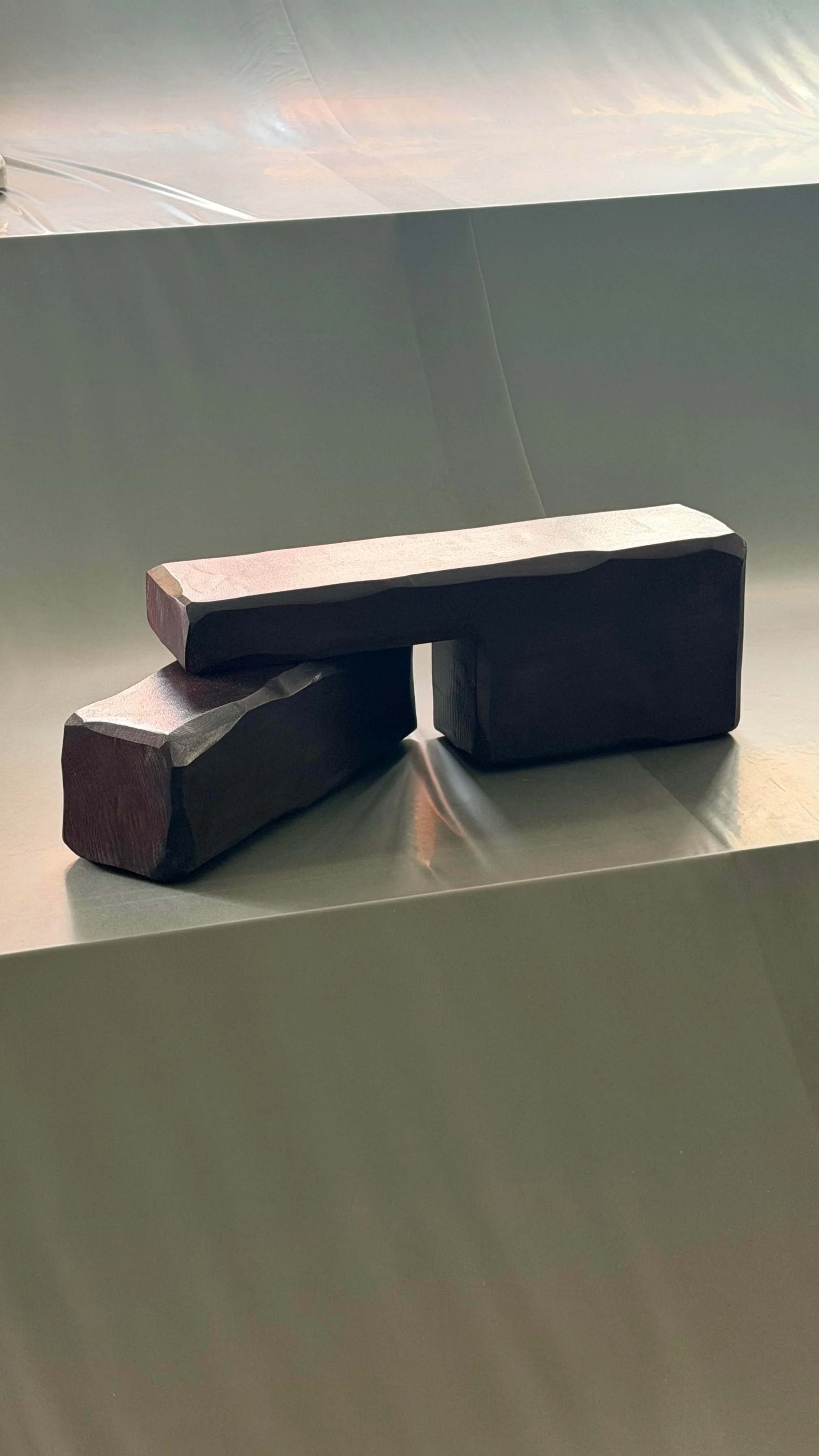
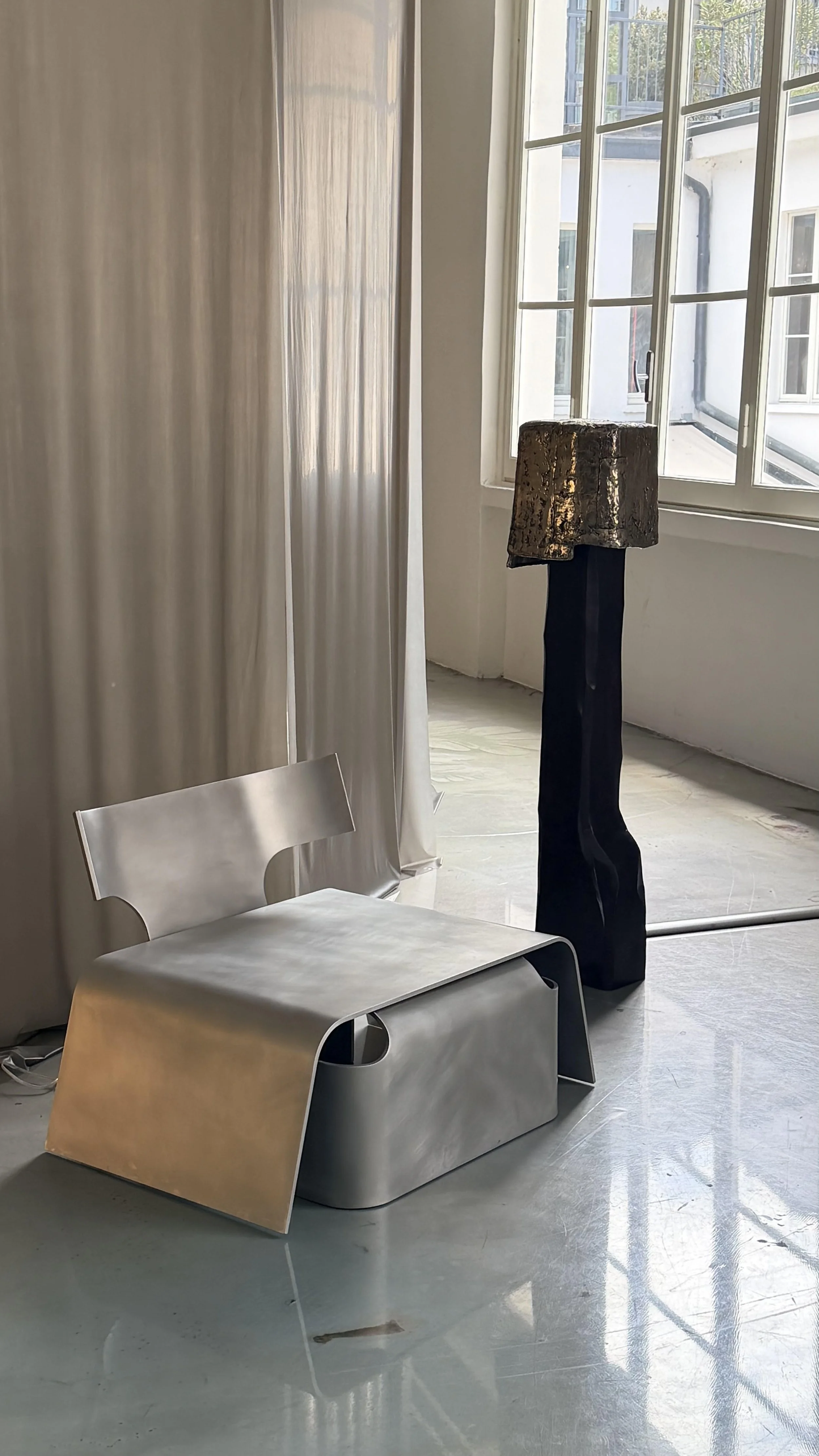
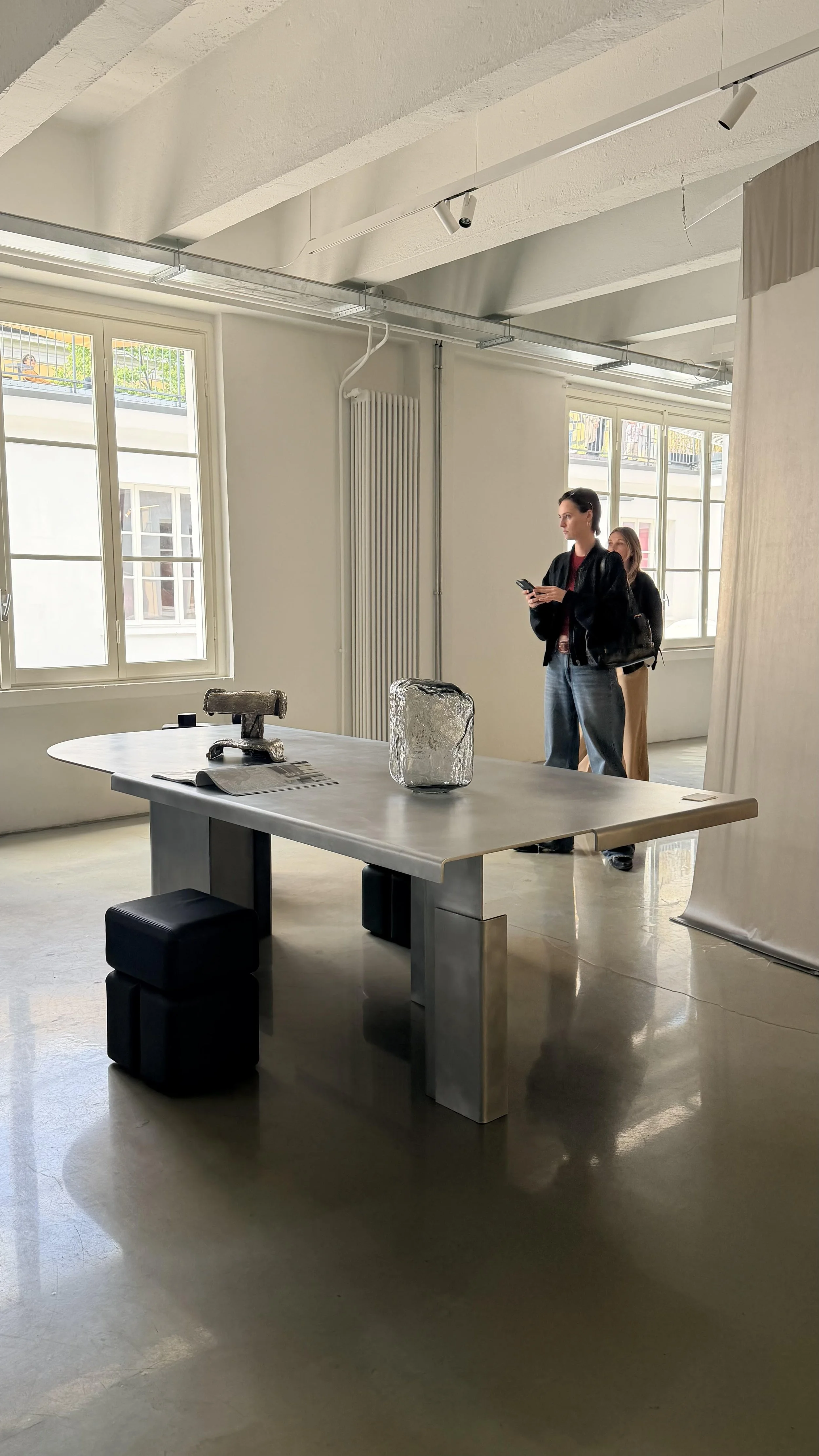
The show brought together a large body of work across a surprising range of materials: blown glass lamps, folded aluminium and leather sofas, timber carved chairs, cast metal tables. On paper, it could have felt disparate. In person, it was remarkably cohesive. Each piece seemed to test how one sculptural language might move through different materials while still retaining the same voice, the same hand, the same force of authorship.
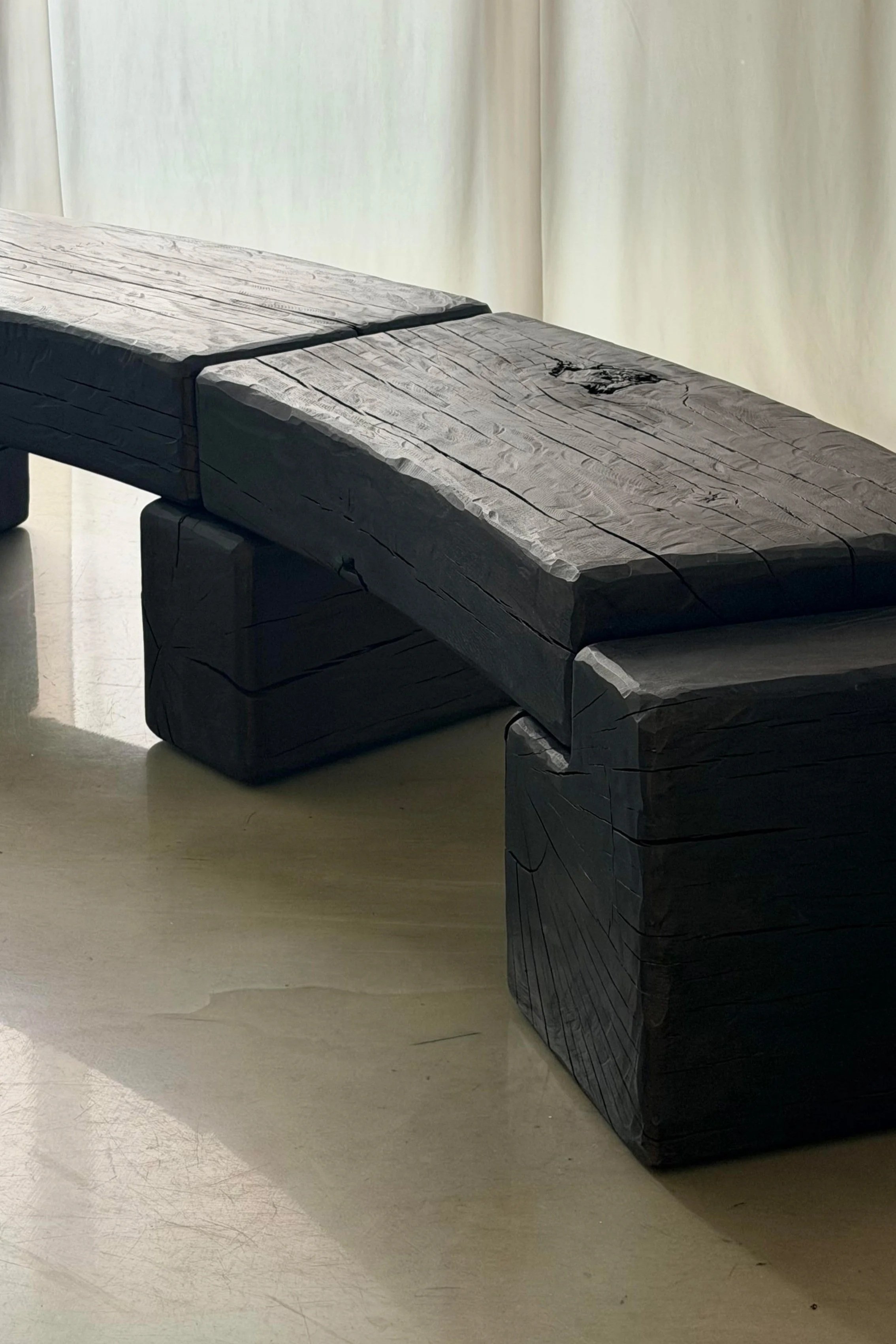
What resonated was not refinement in the conventional sense. It was almost the opposite. The work had a primitive quality: forms crudely sculpted, stacked, folded, carved, or seemingly found rather than fully conceived. There was a looseness to it, but not a lack of control. A playfulness, but not frivolity.
The works felt exploratory without becoming scattered. Across glass, metal, timber and leather, Tangelder’s hand remained unmistakable.
That is difficult to achieve. Many bodies of work are cohesive because they repeat themselves. Others are exploratory because they abandon consistency. Here, the cohesion came from something deeper than style. It came from an attitude toward material and making. The pieces seemed to ask what each material could do, how it could hold weight, resist polish, carry gesture, accept imperfection and still become useful.
There was a physicality to the work that felt particularly compelling. The gesture of a chisel, hammer or hand was not refined away. It remained present in the object, not as decoration, but as evidence. The works felt made, and in that making they retained a kind of force. They did not ask to be admired from a distance. They had the quality of things ready to be touched, moved around, lived with and knocked about.
This is where the show began to connect with our own architectural thinking.
At Davidov, we often return to questions of mass, material presence and the comfort that can come from weight. In architecture, mass is not simply heaviness. It can be protective. Grounding. Reassuring. A thick wall, a deep reveal, a solid hearth, a carved threshold or a robust piece of joinery can all create a sense of permanence that is felt before it is understood.
The same can be true of furniture and objects. A chair, bench or stool with mass offers comfort before anyone sits down. It looks capable. It looks durable. It does not appear precious or anxious. It has the visual confidence of something that can absorb use, weather, marks and time. It is ready for life because it does not pretend to be untouched by it.
That quality was central to Tangelder’s work. Many pieces had a kind of hardy, knockabout character, as though they had already lived somewhere before arriving in Milan. They seemed to carry an unknown history of their own. This gave the work an emotional charge beyond its material experiment. The objects did not feel new in the polished, showroom sense. They felt newly encountered, which is different.
This distinction matters. So much contemporary design is preoccupied with novelty, with producing the appearance of the new. But the objects that endure often feel as though they belong to a longer continuum. They may be freshly made, but they seem to have some relationship to older instincts: stacking, carving, sheltering, balancing, holding. They remind us that making begins with force, touch and material resistance.
There was a thread of this throughout Milan this year, at least in the work I found myself drawn to. Designers drilling into mass, texture, primitivism and the sculptural object. Work that resisted polish. Work that felt closer to excavation than styling. Work that suggested the future of design may not be found in ever thinner, smoother or more frictionless things, but in objects with gravity, character and memory.
Perhaps this is also why Tangelder’s show felt architectural. Not because it resembled buildings, but because it shared architecture’s deeper concerns: weight, proportion, tactility, permanence, atmosphere and use. The pieces occupied the space with a quiet force. They had edges, shadows, density and presence. They understood that form is not only visual. It is bodily.
In our own work, we are interested in this same territory: architecture that is refined, but not fragile; composed, but not sterile; materially rich, but not ornamental for its own sake. We are drawn to spaces and objects that can carry life without being diminished by it. The best architecture is not precious. It accepts use. It deepens with occupation. It gathers marks, rituals and memory.
Tangelder’s Fluid Re-Collection felt important because it gave this thinking an object-scale intensity. It showed how a consistent language can remain open, how material experimentation can still feel grounded, and how primitive form can carry both playfulness and seriousness at once.
Amid the abundance of Milan Design Week, it was not the loudest work that stayed with me. It was work with mass, touch and an unmistakable hand. Work that felt both ancient and newly made. Work that seemed already alive with an unknown history of its own.
Related projects: LDS II Residence, LDS I Residence.
Related reading: Travel as Architectural Education
