
Choosing the Right Architect
A guide for clients building or renovating in Melbourne and Victoria.
A guide for clients building or renovating in Melbourne and Victoria.
Choosing an architect is rarely about finding the “best” practice. It is about finding the right fit. Most people only build once. The process can be exciting, but it can also carry uncertainty. The architect you choose should bring judgement and steadiness, and make decisions clearer rather than louder.
A home is not a single view. It is experienced in sequence. Arrival, threshold, movement, pause. Light shifts across the day and across seasons. Privacy and outlook are negotiated room by room.
There are simple questions that reveal a great deal. Does the plan feel calm and legible. Do the spaces support both quiet and activity. Does the home feel composed rather than busy. When restraint is done well it does not feel empty. It feels deliberate. It frames life with clarity and leaves room for presence.
Most projects become difficult through decision fatigue, not through lack of taste. The difference between a calm project and a stressful one is often the method of decision-making. A strong practice has a clear way of testing options, resolving a direction, and protecting the integrity of the design as constraints tighten. Refinement is not indulgence. It is the work.
Style labels are often the first language people reach for. Modern, minimal, contemporary. Sometimes they are useful as shorthand, but they rarely describe what makes a home live well.
Underneath the label there is a deeper discipline: proportion, light, material honesty, and how the building will weather and settle over time. A restrained home can be warm and deeply personal. It can also be demanding. The strongest outcomes tend to come when client and architect share a temperament, patient, thoughtful, willing to arrive at fewer decisions, better made.
Many clients speak with several established residential studios before choosing the right fit. The difference is rarely quality. It is how you want the process to feel, how decisions are guided, and what you want the home to become over decades.
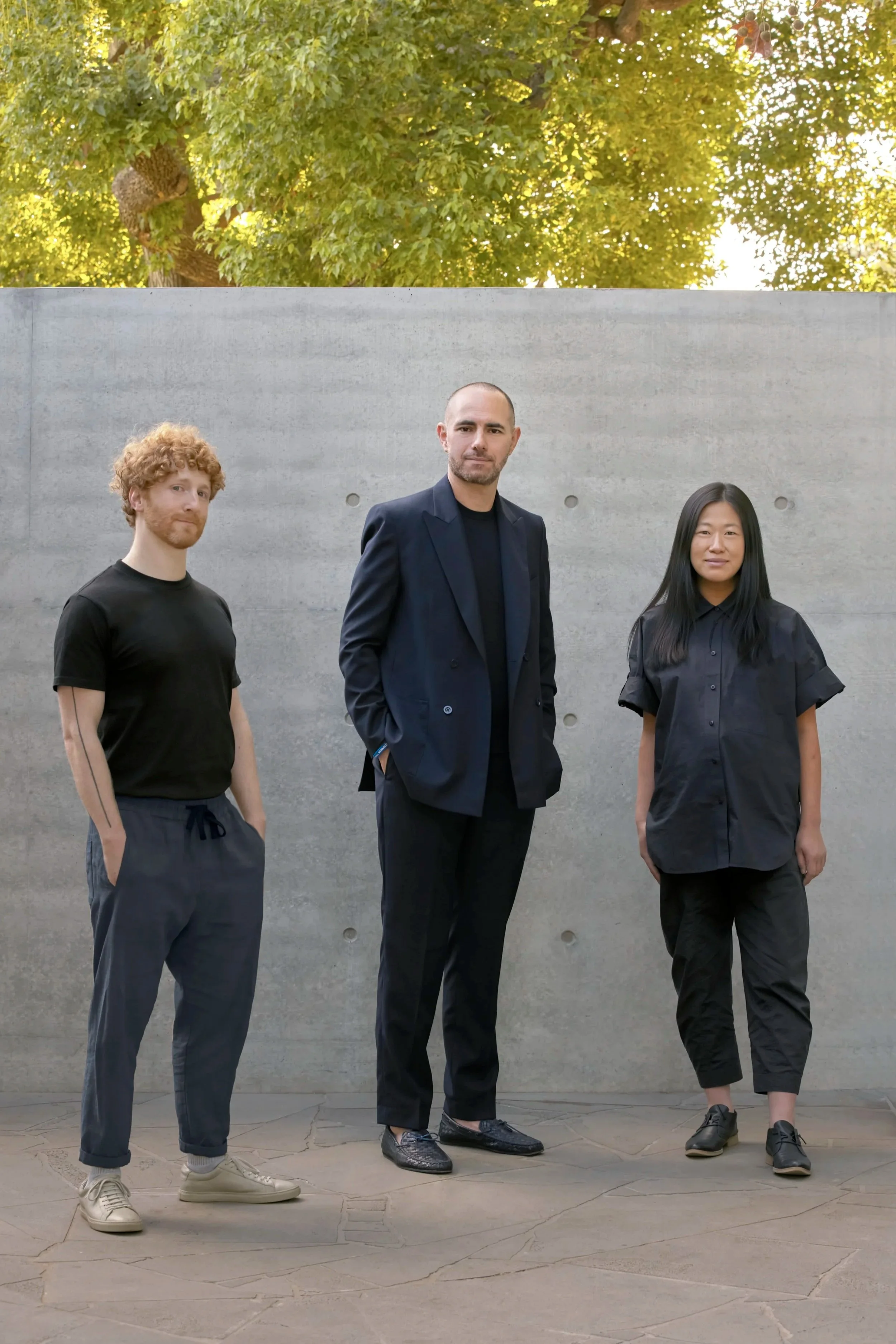
At Davidov Architects, we design architecture where atmosphere is the primary outcome. We work best with clients who value a guided process, material integrity, and homes that become more convincing with time.
A first conversation should be calm and useful. It should clarify scope, planning realities, constraints, and likely next steps. A helpful way to begin is to share your site, your approximate timeframe, and two or three reference projects that resonate. From there, it should be possible to tell quickly whether the fit is right.
Related projects: LDS II Residence, EPSC Residence, Sorrento Bathhouse.
Related pages: Residential Architects in Melbourne, Contact, Toorak Architects.


The Destination
When you engage an architect - What is the destination? And how will you know when you’ve arrived?

When you engage an architect - What is the destination? And how will you know when you’ve arrived?
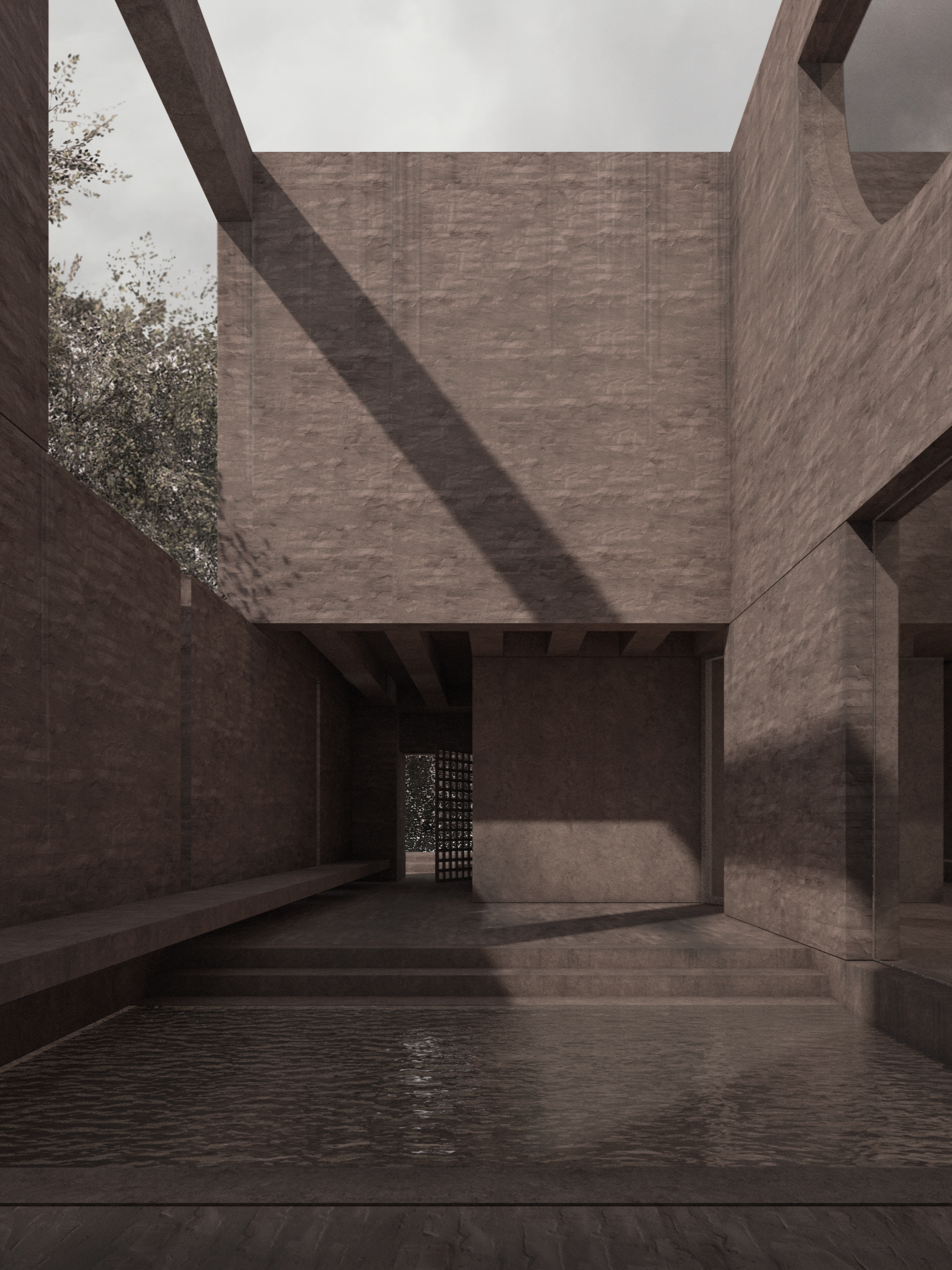
Often, there’s a vision; a feeling, a quiet clarity. You can see yourself sitting in your favourite chair, in a particular room, with a particular view. You can picture the movement of shadows, the softness of the light, the echo of footsteps, the texture of the walls.
Getting from here to there is the architect’s role. But before pen ever meets paper, we need to download that vision - or at least your version of it - from your mind. To understand what matters, what lasts, and what home truly means to you.
Clients often come to us unsure of how to describe what they want. That’s okay. In many cases, they look to us to help crystallise the vision, test possibilities, explore potential, and drive the process forward. It comes down to two things: good communication and trust.
From there, we often joke that there are 10,000 decisions to be made, probably more. Our job is to tackle the vast majority of them, distilling complexity into clarity. Through drawings, visualisations, and thoughtful conversation, we help you see the path ahead, with one eye always fixed on the destination.
Along the way, we experience what we think of as “mini-destinations”, those moments where everything clicks into focus. The language of the project becomes clear. The fog lifts. The idea sharpens. But nothing compares to the moment of true arrival.
Because architecture is never just bricks and mortar. It’s not just stone, glass, or timber. It’s the realisation of something imagined, and more. It’s how space can hold feeling, respond to mood, and evolve with time. It’s the quiet sense of rightness that arrives when something you once only hoped for becomes something you could never quite have imagined, yet now couldn’t imagine being without.

What Lies Beneath the Brief: On Trust, Tension & Design
Architects are not court-appointed.

Architects are not court-appointed.
That might sound obvious, but it’s worth stating: both architect and client have agency and responsibility in choosing to work together. It’s a relationship built on mutual alignment, not obligation.
The act of selecting an architect is the first design decision a client makes. Done thoughtfully, it becomes the foundation for a creative relationship that can be defined by tension, trust, growth, and ultimately, transformation on both sides.
A client’s task isn’t just to find an architect, but to find the right one; a practice whose values, approach, and aesthetic sensibility resonate. Likewise, we seek clients who are open, to being challenged, to being surprised, and to trusting a process that is sometimes linear, sometimes not. When that chemistry is there, the project can really sing.
Some clients arrive with Pinterest boards and magazine clippings. Others bring carefully structured multi-page briefs. Both approaches show care, and both offer insight. More importantly, they start the conversation, and begin to reveal what lies beneath the surface.
Every project begins with a brief. But the real work happens in the subtext: the unspoken needs, the contradictions, the subtle tensions between wants and instincts. The early meetings are a kind of decoding, not just listening to what’s said, but observing body language, silences, patterns. Slowly, a clearer picture emerges. And with it, trust.
An informed, enthusiastic client is a gift. Their clarity can embolden us. Their ideas can become sparks for ours. When we sense a client is open, really open, we ask. Can we be braver? Bolder? Is there something here we wouldn’t have otherwise explored?
Of course, design is rarely without friction. Sometimes we nudge clients out of their comfort zones, if only momentarily. And in turn, they challenge us to sharpen, refine, articulate. When the relationship is grounded in respect, this push and pull doesn’t weaken the project, it strengthens it. It forces everyone to think more deeply. To raise the bar.
When a client feels safe, and we feel empowered, design can become expansive. That’s the sweet spot; when both parties feel secure enough to take risks, to be vulnerable, to work from instinct as well as intention.
The relationship evolves as the project unfolds. What begins as formal and careful becomes casual and collaborative. Conversations become more fluid, decisions more intuitive. The language of the project, once tentative, begins to crystallise.
When the relationship works, it brings out the best in everyone involved. The result is more than just good design, it’s a reflection of shared trust, curiosity, and intent.